
Can Africa escape digital colonialism?
Who owns the data, the platforms and the skills behind Africa's digital economy? The questions behind the first episode of the SimTek Insights Podcast, and what builders here can do about them.
- Author
- John Alpha Kargbo
- Published
- Nov 27, 2026
- Reading time
- 6 min
- Filed under
- Africa Tech
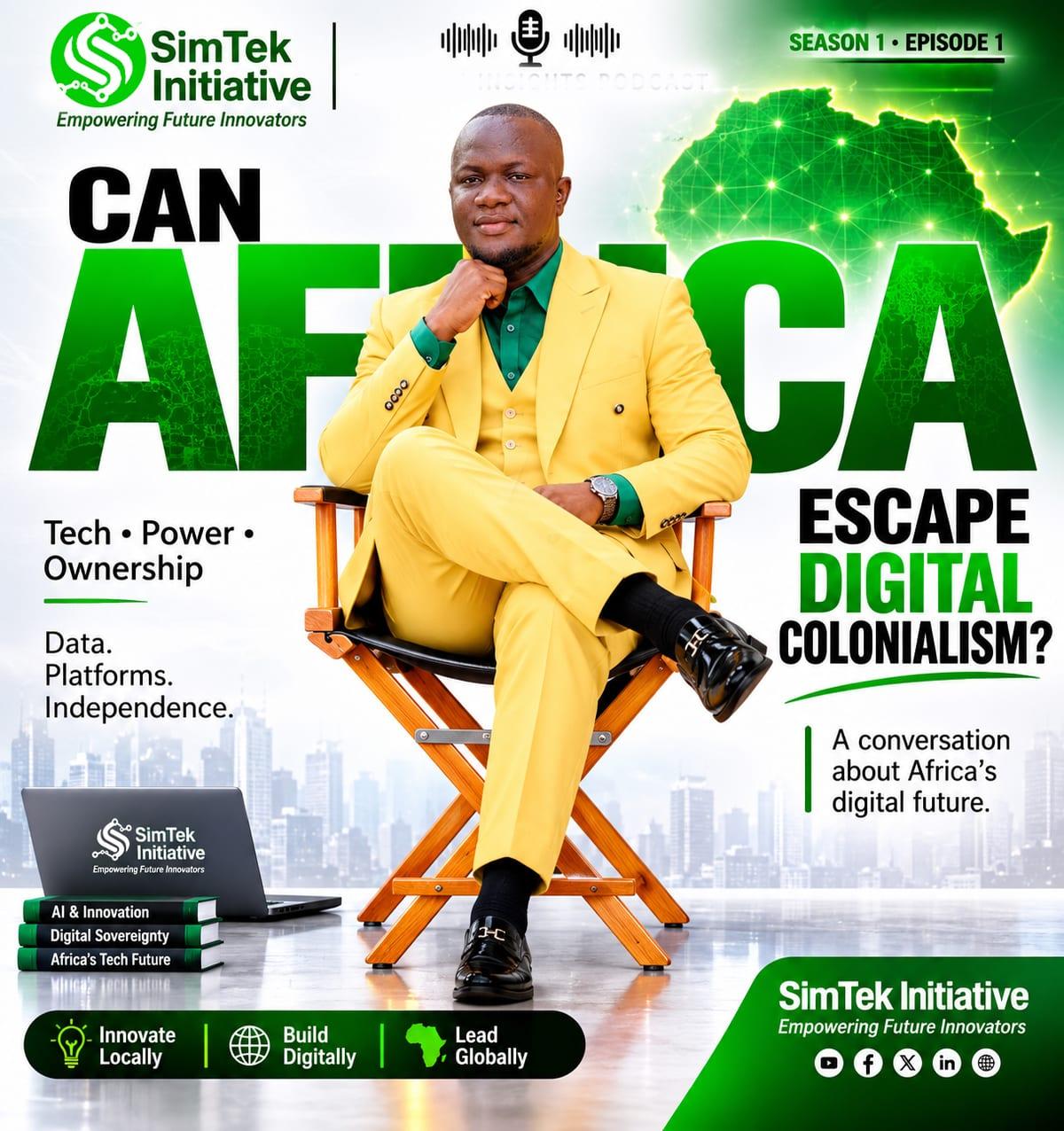
This article accompanies the first episode of the SimTek Initiative Insights Podcast: Can Africa escape digital colonialism? It is a conversation about technology, power and ownership, and about who gets to build Africa's digital future.
What "digital colonialism" means
The phrase describes a familiar pattern in a new form. Instead of land or minerals, the valuable resource is data, attention and the platforms that collect them. When the tools a country depends on are designed, owned and controlled elsewhere, the decisions about them are made elsewhere too: what gets built, what it costs, which language it speaks, and where the profit and the data end up.
That is not an argument against global technology. Open-source software, cloud services and international platforms have made it possible for a developer in Freetown to build for clients anywhere. The question is about balance: whether Africans are only users of digital systems, or also owners and builders of them.
Three questions worth asking
Who owns the data? Every payment, message, health record and school report creates data. When it is stored and analysed far away, under someone else's rules, the people it describes have little say over how it is used.
Who owns the platforms? Businesses that rely completely on one foreign platform for sales, communication or payments are exposed to its pricing and policy changes. Local platforms that understand local needs, from mobile money habits to low-bandwidth connections, can serve people better.
Who has the skills? Ownership means little without the people to build and maintain systems. Skills are the part of independence that cannot be bought; they have to be grown.
What builders and businesses can do now
The episode's three themes are a useful checklist: innovate locally, build digitally, lead globally.
- Own your digital front door. A website on your own domain is an asset you control. Social media pages are rented space; your own site and your own customer list are not.
- Keep your data where you can reach it. Choose tools that let you export your data, and keep copies of what matters: customers, orders, records.
- Build for local conditions. Fast pages on slow mobile data, WhatsApp-first contact, and pricing that fits local budgets are not compromises; they are good engineering for the market.
- Invest in skills. Hire and train local developers and designers, and share what you learn. Every project delivered here is experience that stays here.
- Use AI as a tool you direct. AI can answer customers, draft content and automate routine work. Used well, it helps small teams compete; the goal is to direct it, not depend on it blindly.
So, can Africa escape it?
There is no single answer, and that is why it is worth a conversation. Independence in technology will not come from rejecting the world's tools, but from owning more of the data, the platforms and the skills, one product, one business and one developer at a time.
Listen to the full conversation on the SimTek Initiative channels. And if you are a business ready to own your digital presence, see my services, check what a website costs, or start a project.